|
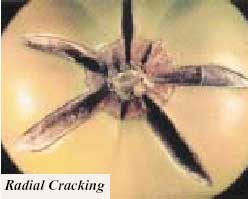
What is cracking?
Cracking
is the splitting of the epidermis around the calyx or stem scar.
There are two types of fruit cracking in tomatoes.
(a) Concentric cracking, which is a splitting of the epidermis in
circular patterns around the stem scar.
(b) Radial cracking which is a splitting of the epidermis from the
stem scar towards the blossom end.
Why
does cracking occur? Cracking
depends on the ability of the epidermis and its cells to stretch.
Some varieties have an epidermis that stretches well and will have
very little or no circular cracking. Other varieties can have the
opposite situation where they do not stretch well and have a lot of
cracking.
 When
Does racking occur? When
Does racking occur? Cracking
occurs as the tomato nears maturity. More susceptible varieties
crack in the mature green stage and more tolerant varieties at later
stages. The earlier the cracking then the deeper and longer the
crack becomes. The problem is usually more severe on the lower
trusses. Circular cracking often occurs on ripe tomatoes that are on
the vine too long. |
|
Control of Cracking
1. A good fertilizer programme
that will avoid overly succulent plants.
2. Proper pruning and leaf removal. Excess removal will result
in fruit being exposed too much to the sun.
3. A good preventative spray programme to control foliar
diseases and reduce the loss of leaves. More leaves give the fruit
better protection.
4. Proper water management: do not over irrigate; water at
fixed intervals and increase or decrease quantities as needed. Use
tensiometers.
5. Constantly monitor the CF levels of the soil solution,
using soil extractors, CF meters and equipment to measure nutrient
levels in the soil solution.
 |
The CF levels should remain fairly
constant in the different stages of the crop. Big fluctuations in
the CF levels mean that the plant will probably absorb too much
water when the level suddenly decreases.
When it rains then the rainwater
entering the soil will dissolve the nutrient elements and take them
down deeper into the soil. This causes the CF levels in the root
zone to fall to a lower level and water moves more easily and
quickly into the plant. The epidermis of the fruit cannot stretch
enough to absorb all the extra water and the result can be cracking.
To control the CF in rain, it is recommended to give potassium
chloride (5 kg/ha more or less depending on the situation) to the
crop while it is raining or when this is not possible, immediately
after the rain. This will help restore the CF without adding extra
nitrogen.
NOTE:
Some
growers also believe that Greenback varieties are more tolerant to
cracking, russeting and wind marking, compared to the uniform green,
non-greenback types. Greenback types at this stage seem to have a
tougher, more resilant outer skin, which may combat a wider range of
environmental conditions. |

